Iron Roughneck Torque Accuracy: How Recertification Restores OEM Specifications
Declining iron roughneck torque accuracy is usually the last problem diagnosed on a unit showing inconsistent connections. The first assumption is operator error.

In most cases, the root cause is mechanical: hydraulic cylinders that have drifted from calibration, torque head components worn past tolerance, and seal degradation that bleeds pressure mid-cycle. Recertification addresses each of those failure points at the component level. A repair scope does not.
Iron roughneck torque drift does not announce itself as a system failure. It accumulates across thousands of connection cycles as individual components wear beyond their calibrated tolerances.
The unit continues to function, make connections, and report values that look reasonable on a readout, while the actual torque delivered to the connection gradually departs from iron roughneck OEM specifications. By the time the variability is visible in connection quality, the mechanical drift has been building for weeks or months.
The units most likely to present with iron roughneck torque accuracy problems are not always the ones with the highest visible wear. Often, a unit running at adequate performance shows drift when cumulative tolerance loss across multiple systems crosses a threshold.
No single component is the obvious cause. The accuracy problem is distributed across the hydraulic and mechanical baseline as a whole. Understanding where that drift originates is what separates a recertification approach from a repair approach.
The hydraulic cylinders governing clamping force and torque application operate within defined pressure-to-force relationships. Over time, bore wear, fluid contamination, and internal seal degradation reduce the efficiency of those relationships.
The system reaches its commanded pressure target but delivers less mechanical output than the specification assumes. A torque readout may display the correct value while the actual connection torque falls short.
This failure mode is invisible on a visual inspection and will not surface in a standard repair scope unless it is specifically tested for.
The torque head assembly transmits final makeup torque through internal gear and clutch components. As those surfaces wear, the mechanical advantage of the transmission changes.
The effect is gradual: early in a wear cycle, connections are marginally inconsistent. Later, final torque values drift outside tolerance on a meaningful percentage of cycles.
The failure does not present as a sudden event. It shows up as low-level inconsistency that crews often attribute to variability in pipe condition or connection quality before the roughneck is identified as the source.
Hydraulic seal degradation affects every stage of the connection cycle, but its impact is most visible where precise torque control matters most. On the NOV IR3080 and NOV ST80, the actuator circuits controlling shoulder torque and final makeup torque are particularly sensitive to internal leakage.
As seals wear, pressure bleeds between chambers during dynamic loading. The system commands the correct pressure, but the actuators cannot hold it consistently through the torque application phase.
Iron roughneck OEM specifications become unreachable with a degraded seal baseline, regardless of how the machine is operated.
This distinction determines whether a unit returns to the field capable of consistent torque makeup or returns with the same drift problem rebuilding after the next high-cycle campaign.
Iron roughneck repair targets what is visibly failed or operationally broken. A leaking seal gets replaced. A cylinder with a documented fault gets rebuilt. The unit goes back to work.
What repair does not do is evaluate the full hydraulic system against OEM calibration standards, disassemble the torque head to measure gear and clutch wear at the component level, or verify the unit’s torque output against the specification it was built to meet. It is not the right tool for a unit whose iron roughneck torque accuracy has degraded across multiple systems simultaneously.
Iron roughneck recertification starts from a different premise. The unit goes through a full teardown and component-level assessment against OEM specifications. Every hydraulic circuit is evaluated for pressure integrity and calibration accuracy. The torque head is disassembled, and each wear surface is measured against tolerance. Seals are replaced as a system, not individually.
The unit does not leave the shop until its torque output has been tested and verified to meet the specification it was built to. That is what restores iron roughneck torque accuracy. Not a targeted fix on the most recently failed component.
Find out whether your iron roughneck is a candidate for full recertification and what the process involves for your platform.
Canadian Global performs recertification on both the NOV IR3080 and NOV ST80 and supplies parts for both platforms, including components no longer available through standard OEM channels. That combination of platform-specific supply chain capability and direct engineering experience changes what is achievable at the component level during a recertification scope.
Restoring NOV IR3080 torque accuracy requires addressing the torque head clutch assembly and the primary hydraulic circuits governing final makeup torque, which are the components most prone to drift on high-cycle units. Clamping cylinder bore wear on this platform affects force application precision at the shoulder torque stage in ways that accumulate well before the cylinders show visible failure.
On the ST80, deviations from NOV ST80 torque specs most commonly originate in the actuator control system for final makeup, where seal wear in the high-pressure circuit allows internal leakage under sustained load. In both cases, component-level restoration to OEM tolerance is what the recertification scope delivers, not a general rebuild to operating condition.
For components no longer available through standard supply channels, Canadian Global manufactures or reverse-engineers parts in-house. That capability keeps the recertification scope on schedule rather than waiting on external procurement timelines, which matters most for older IR3080 units that have been in continuous service for a decade or more.
A unit returned to iron roughneck torque accuracy is not simply a repaired unit. It is a unit that can meet its connection specification on every cycle, across a full campaign, without crew intervention to compensate for mechanical inconsistency.
Connection torque values land within the specification more consistently. Cycle times stabilize. The frequency of manual corrections drops. On a multi-well pad program where the same roughneck makes hundreds of connections per day, that consistency is measurable in reduced connection failure rates and less time investigating torque anomalies between wells.
The connection between recertification and automation reliability is direct. The Autonomous Sequence Upgrade from Canadian Global uses PLC logic to deliver repeatable torque makeup on every connection by removing manual variability from the cycle. One of the leading Canadian drilling companies was the first operator to adopt that upgrade, and their unit became the highest-performing roughneck in their entire fleet, outperforming every other unit on cycle consistency, output, and safety metrics.
That result was built on a recertified mechanical baseline. When hydraulic drift and torque head wear are present, PLC logic is compensating for a degraded system rather than controlling a calibrated one. For a full breakdown of how that control architecture works, see how PLC-based autonomous sequencing changes torque makeup consistency on the drill floor.
Recertification is the decision point. The unit either returns to the field with a restored mechanical baseline or goes back with drift that continues to accumulate. For operators evaluating whether the automation upgrade is viable on their current equipment, the starting question is whether the mechanical baseline is sound enough to support it.
Canadian Global performs iron roughneck recertification on the NOV IR3080 and NOV ST80, with in-house parts supply for legacy components and APEGA-certified engineers overseeing every scope.
CG also engineers the Autonomous Sequence Upgrade for both platforms, meaning a recertified unit can move directly into an automation-enabled configuration without a second service event. If your unit is showing torque variability that has not been resolved by targeted repair, contact Canadian Global to restore iron roughneck torque accuracy and discuss what a full recertification scope looks like for your platform.
 https://canadianglobal.ca/wp-content/uploads/2026/06/What-to-Expect-During-a-Level-4-Top-Drive-Recertification-2.jpg
1250
2000
Abstrakt Marketing
/wp-content/uploads/2025/12/Canadian-Global-Hi-res-02.png
Abstrakt Marketing2026-06-02 06:24:142026-06-02 06:24:20Improve Torque Consistency: PLC-Based Autonomous Sequencing
https://canadianglobal.ca/wp-content/uploads/2026/06/What-to-Expect-During-a-Level-4-Top-Drive-Recertification-2.jpg
1250
2000
Abstrakt Marketing
/wp-content/uploads/2025/12/Canadian-Global-Hi-res-02.png
Abstrakt Marketing2026-06-02 06:24:142026-06-02 06:24:20Improve Torque Consistency: PLC-Based Autonomous Sequencing https://canadianglobal.ca/wp-content/uploads/2026/04/bottom-view-of-top-drive-oil-machine.jpg
1250
2000
Abstrakt Marketing
/wp-content/uploads/2025/12/Canadian-Global-Hi-res-02.png
Abstrakt Marketing2026-04-16 09:22:052026-05-07 07:59:00Iron Roughnecks vs. Top Drives: Which Requires More Frequent Repairs?
https://canadianglobal.ca/wp-content/uploads/2026/04/bottom-view-of-top-drive-oil-machine.jpg
1250
2000
Abstrakt Marketing
/wp-content/uploads/2025/12/Canadian-Global-Hi-res-02.png
Abstrakt Marketing2026-04-16 09:22:052026-05-07 07:59:00Iron Roughnecks vs. Top Drives: Which Requires More Frequent Repairs?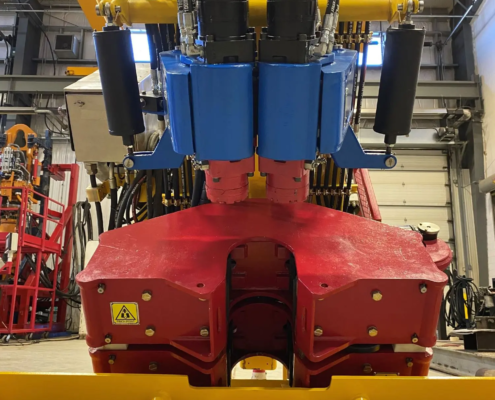 https://canadianglobal.ca/wp-content/uploads/2025/12/Iron-Roughneck-Recertification-rotated-1.webp
2000
1500
Abstrakt Marketing
/wp-content/uploads/2025/12/Canadian-Global-Hi-res-02.png
Abstrakt Marketing2026-03-16 09:34:532026-05-07 07:59:00Iron Roughnecks: Warning Signs Your System Needs Immediate Repair (and How to Fix Before Failure)
https://canadianglobal.ca/wp-content/uploads/2025/12/Iron-Roughneck-Recertification-rotated-1.webp
2000
1500
Abstrakt Marketing
/wp-content/uploads/2025/12/Canadian-Global-Hi-res-02.png
Abstrakt Marketing2026-03-16 09:34:532026-05-07 07:59:00Iron Roughnecks: Warning Signs Your System Needs Immediate Repair (and How to Fix Before Failure)